
Why Nature Helps Us Slow Down: The Science Behind Forest Retreats
The first thing many guests notice when they arrive at Kawoq Forest is not the view. It is the pace.
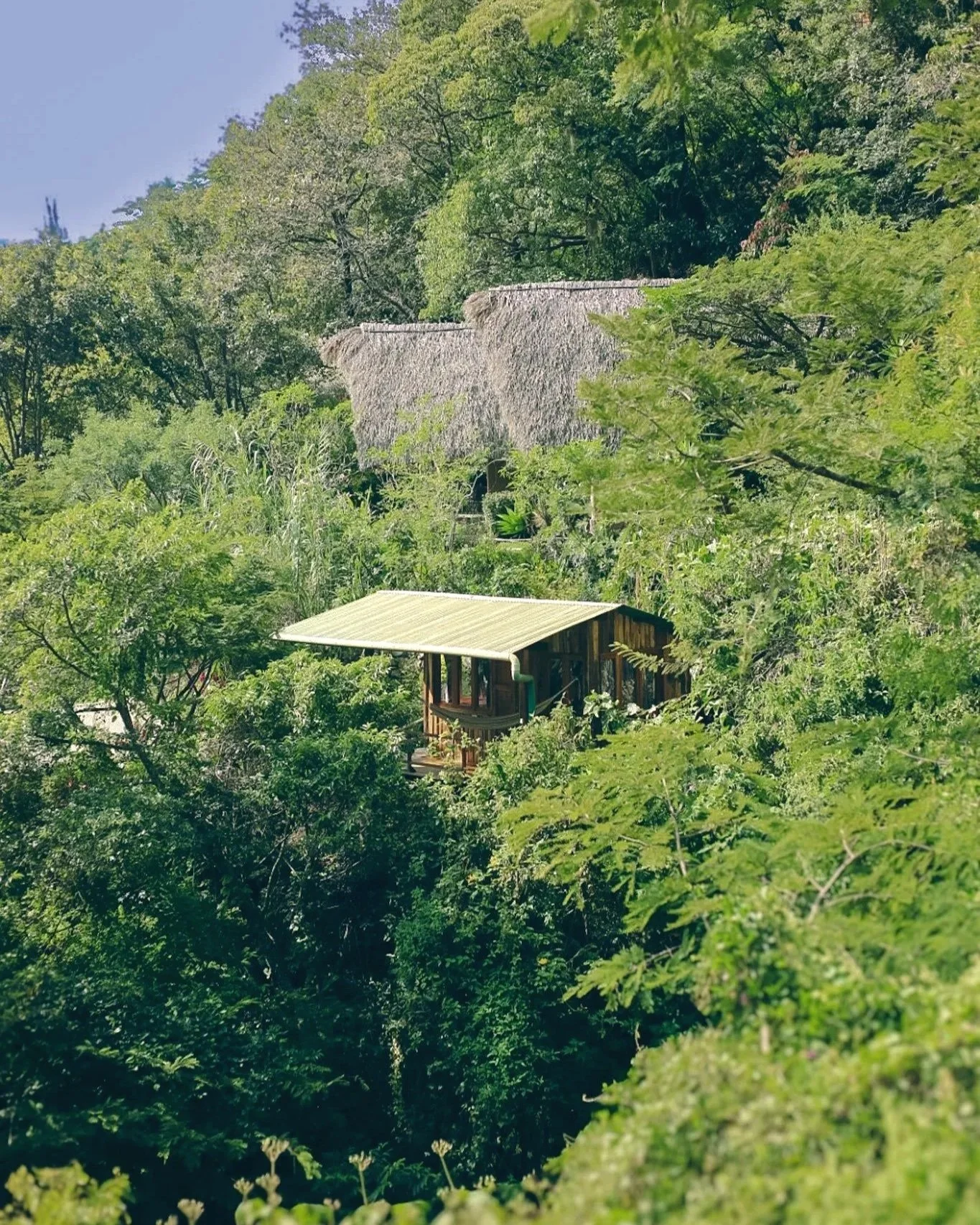
The walk through San Marcos begins the transition. The road gives way to a footpath. Traffic noise fades. The air feels different beneath the trees. By the time Lake Atitlán appears between the branches, the body has already started receiving a new set of signals.
We often think of slowing down as a decision: close the laptop, put away the phone, take a deep breath. But the places around us also shape how alert, distracted, or settled we feel. This is one reason a forest retreat can feel so different from an ordinary vacation. Nature does not simply provide a beautiful backdrop. It becomes part of the experience.
The mind gets a different kind of break
Daily life asks us to direct our attention constantly. We move between messages, tabs, decisions, traffic, notifications, and conversations, filtering out one thing so we can focus on another. Even when the work is meaningful, that kind of concentration can become tiring.
Natural environments hold our attention more gently. The movement of leaves, changing light, birdsong, or water can draw us in without demanding a response. Researchers sometimes describe this as soft fascination: a form of effortless attention that gives the mind room to recover from more demanding tasks.
In a widely cited study, participants performed better on attention and memory tasks after walking in nature than after walking through an urban setting. The study was small, and no single walk can erase mental fatigue, but its findings help explain a familiar feeling: after time among trees, it can become easier to think clearly again.
That matters during both personal and group retreats. Reflection, learning, creativity, and honest conversation all require attention. When less energy is spent filtering noise and interruption, more can become available for the experience itself.
The body begins to shift out of urgency
Stress is not only a thought. It also appears in the body: in breathing, muscle tension, heart rate, and the hormones that help us respond to pressure.
Research on forest bathing, the practice of spending slow, attentive time in a forest, suggests that forest environments may support short-term stress recovery. A meta-analysis comparing forest and urban settings found lower salivary cortisol levels in the forest groups, although the researchers also noted that the available studies were limited and that expectations may influence the results.
In other words, nature is not a cure-all. But it can create conditions that make settling easier.
Sound is part of those conditions. A synthesis published in the Proceedings of the National Academy of Sciences found that natural sounds were associated with lower stress and annoyance, along with improved mood and health outcomes. The steady layers of a forest—birds, wind, insects, flowing water—ask something different of the nervous system than engines, alarms, and constant human activity.
This is often how slowing down begins: not with a dramatic breakthrough, but with the shoulders dropping a little, the breath becoming less hurried, and the realization that there is nowhere else to be for the next few moments.
Nature creates distance from repetitive thought
Changing environments can also interrupt the mental loops we carry with us.
A study led by researchers at Stanford compared a 90-minute walk in nature with a walk in an urban setting. Participants who walked in nature reported less rumination—the repetitive pattern of returning to distressing thoughts—and showed reduced activity in a brain region associated with that pattern.
A forest retreat offers more than a single walk. It creates repeated opportunities to step away from familiar cues and routines: waking with natural light, moving the body, eating without rushing, sitting quietly, and allowing stretches of the day to remain unfilled.
The effect is not about escaping life. It is about creating enough distance to meet it differently.
Why the retreat setting matters
A retreat schedule can be thoughtfully planned, but the environment is what guests experience between every session.For someone choosing a Personal Yoga Retreat in Lake Atitlán, the forest supports a gentle daily rhythm of meditation, yoga, nourishing vegetarian meals, and unhurried time. The practices provide structure, while the natural setting gives the spaces between them depth. A morning class can continue into brunch overlooking the trees. An afternoon pause can become time in a hammock, a quiet walk, or a few pages of a book.
For retreat leaders, the setting shapes the group before the first workshop begins. Shared meals, walks between spaces, open-air practices, and evenings above the lake create natural moments of connection. Guests have time to process what arises instead of moving immediately to the next obligation.
This is why choosing a group retreat center in Guatemala is about more than beds and studio space. The right environment supports the intention of the retreat. It helps participants arrive, become present, and connect with one another. It also allows facilitators to focus more fully on guiding their group, rather than working against a setting that feels busy or disconnected from the experience they want to create.
A slower rhythm above Lake Atitlán
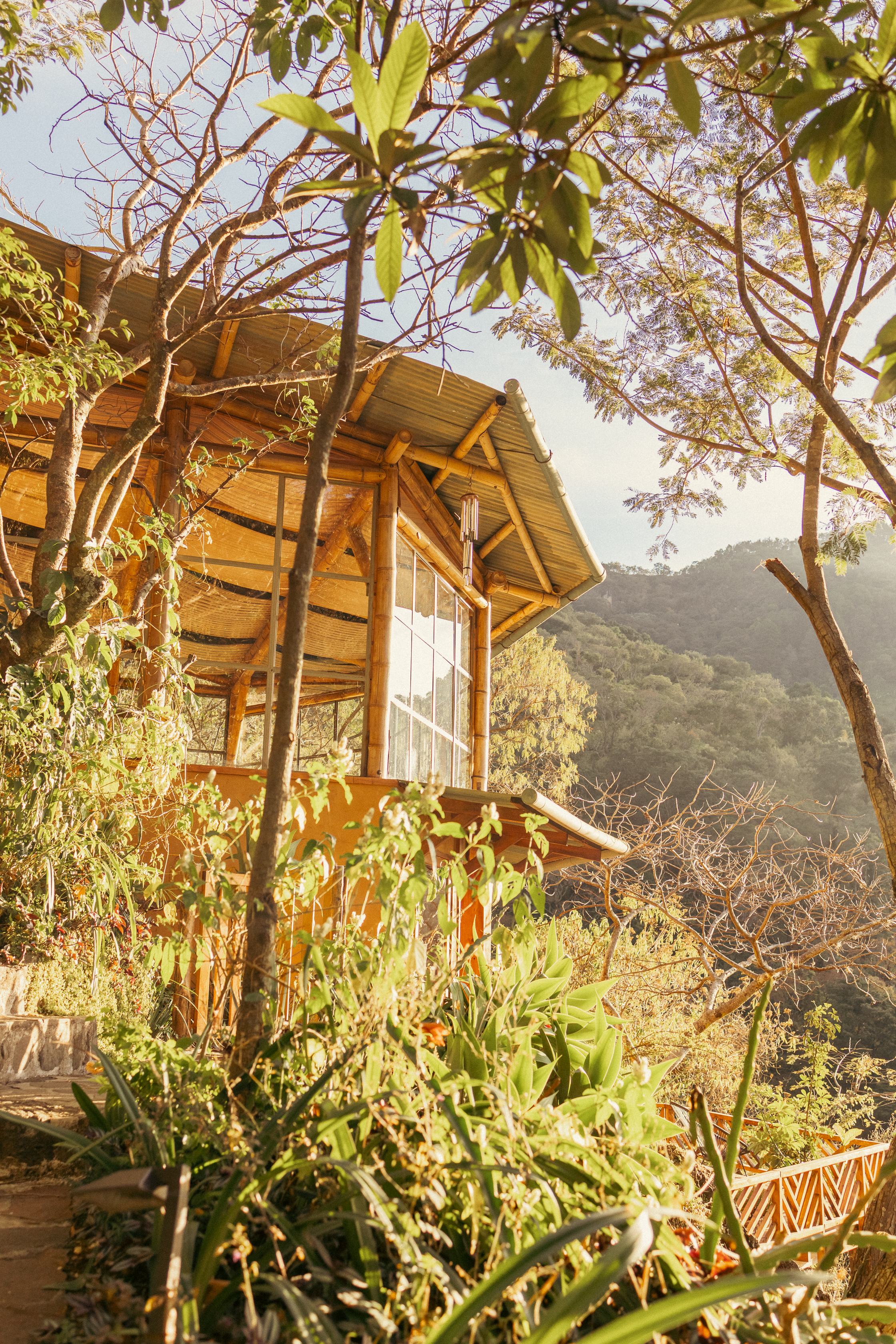
Kawoq Forest is set into the mountainside above San Marcos La Laguna, surrounded by trees and open views of Lake Atitlán and its volcanoes. It is accessible only by foot, and that journey is part of the arrival.
Here, the landscape is woven into each day: yoga spaces open toward the forest, accommodations follow the hillside, meals bring guests together, and quiet corners make room for solitude. Some visitors come for a structured personal retreat. Others stay in the forest and create their own rhythm. Retreat leaders come with a vision for their community and find a setting that helps that vision take shape.
The experience can be different for every person, but the invitation is the same: let the pace soften enough to notice what is already here.
Experience Kawoq Forest
Whether you are looking for a personal retreat in Lake Atitlán or imagining a meaningful experience for your group, Kawoq Forest offers a place where nature, thoughtful hospitality, and time can work together.
Discover Kawoq Forest and find the retreat experience that fits you.
If you are planning a group retreat in Guatemala, contact Alessa, our retreat specialist, at retreats@kawoqforest.com. She can guide you through the space, available options, and next steps for bringing your retreat to life.
Research referenced
Berman, M. G., Jonides, J., & Kaplan, S. (2008). The cognitive benefits of interacting with nature. Psychological Science.
Antonelli, M., Barbieri, G., & Donelli, D. (2019). Effects of forest bathing on levels of cortisol as a stress biomarker. International Journal of Biometeorology.
Bratman, G. N., et al. (2015). Nature experience reduces rumination and subgenual prefrontal cortex activation. Proceedings of the National Academy of Sciences.
Buxton, R. T., et al. (2021). A synthesis of health benefits
